Tuesday, April 16, 2013

Is every ruling of a Mujtahid Scholar correct?


Is every Mujtahid Scholar correct or can some of them be incorrect in their rulings in the branches of Islamic law? 

Imam Abd Al-Mu’min Al-Hanbali (658-739)(رحمه الله) says:[1]

الحق في قول واحد, و المخطئ في الفروع – ولا قاطع- معذور, مأجور على اجتهاده

“The truth is (only) in one statement (ruling).  And as for the scholar who makes a mistake in issues related to the branches of the religion (not in issues that have definitive proofs), he is excused, rewarded for his Ijtihaad (deductive ruling)”

Sheikh Abd Allah bin Saalih Al-Fawzaan Says:

“This issue is concerning the correctness of a Mujtahid Scholar[2], and regarding it there are two opinions:

The first: That only one opinion can be correct, and anything besides that is wrong, this is because the truth can only be one and not more than one. And this is what the large part of scholars (Jamhoor) are upon from the Shafi’I, Maaliki, and Hanbali Madhabs, and it is one opinion from the Hanafis.

As for the one who is incorrect, he has made a mistake in an issue from the among the issues of the branches of Islamic Jurisprudence (Furoo in Fiqh) in which the proofs are “supposed (ظنية)” and not “definitive (قاطع”)-which come from the texts of Quran and Sunnah or Ijma’a (Majority ruling), then he (the one who made the mistake) is excused, and there is no sin upon him, because of the correctness of his intention, and because he made a mistake without intending to do so.

Rather he is rewarded because of the hadeeth where the Prophet (صلى الله عليه و سلم) said “If a ruler rules by his Ijtihaad (deductive ruling) and he makes a mistake (in the ruling) he has one reward.” And this reward is the reward to him for doing the Ijtihaad (deductive ruling).

Imam Abd Al-Mu’min continues by saying:

"و قال بعض المتكلمين: كل مجتهد مصيب, و ليس على الحق دليل مطلوب. و قال بعضهم: اختلف فيه عن أبي حنيفة و أصحابه..."

And some Islamic Scholars of Rhetoric have said that every Mujtahid scholar is correct, and it is not a requisite for the truth (In an Islamic issue: i.e.: مسالة) that there come along with it a (definitive) proof (directly and clearly from the text: i.e.:  نصيor قطعي: i.e.: definitive), and some of them said Abu Haneefa (رحمه الله) and his companions had a difference of opinion about which one of these was correct.”

Shiekh Abd Allah says:

The second opinion concerning the correctness of the Mujtahid scholar and his mistakes when he does Ijtihaad (deductive ruling), is that every Mujtahid scholar is correct, and that it is not a requisite for the truth to be true that it come along with definitive proof (قطعي), rather whomsoever struggles in trying to find the correct answer from among the various possibilities he is correct, because of the lack of definitive proof for that answer to be completely clear that it is in fact the only correct way from among the other opinions that differ from that scholars selection.

As for the first position it is the most correct in this issue, because of the hadeeth that was previously mentioned of Aamir bin Al-‘Aaas where he heard the Prophet (صلى الله عليه و سلم) say “If the ruler rules with his deductive ruling (Ijtihaad) and he is correct, he will get two rewards, and if the ruler rules with deductive ruling (Ijtihaad) and makes a mistake, he will get one reward.”[3]

Sheikh  Sa’ad  bin Naasir Ash-Shatari mentions in his book “Al-Usool wa al-Furoo’” the following concerning this specific issue.

“The People of Knowledge differ concerning the rulings related to the branches (furoo) of Islamic law when the people of Ijtihaad (deductive ruling) have differed in their rulings: The issue is, “Is the truth in only one of their rulings, or can the truth be in multiple rulings for any specific issue?”

 In which case the scholars have two statements:

That the truth is in only one of the rulings (and the rest of the rulings in the same issue are wrong), and the Majority (Jamhoor) had this opinion, it is an opinion of Abu Haneefa (رحمه الله), and most of his companions took it as well, and it is a statement of Imam Malik (رحمه الله)  and most of the Madhab, and it is a statement of Shafi’I (رحمه الله)  and most of the Madhab as well, and it is a statement of Imam Ahmad (رحمه الله)  it is what those who follow him follow.  Likewise there is a group from the Mu’tazilites who take it and a saying of Abu Al-Hasan Al-Asha’ri (رحمه الله) and some of the Ashaa’irah have followed it. 

They derived this ruling from many proofs, and from the most prominent of those proofs are:

1)      The Statement of Allah in the English translation:

“And [mention] David and Solomon, when they judged concerning the field - when the sheep of a people overran it [at night], and We were witness to their judgment. And We gave understanding of the case to Solomon, and to each [of them] We gave judgment and knowledge. And We subjected the mountains to exalt [Us], along with David and [also] the birds. And We were doing [that].” [4]

So Allah says: “And We gave understanding of the case to Solomon”

And in order to understand the reasoning behind their deriving the proofs from these verses is that Allah specified Suleiman with understanding which proves that he was correct in his ruling, and a ruling that differed with him was a mistake.

The opposition in terms of those who disagree with these derived proofs mention the following points:

a)      That saying this causes you to say that the Prophets of Allah are fallible, and this is not correct.

In response to this we say, they are infallible in their delivering the message sent by God, and they are infallible in terms of doing major sins, as for making some mistakes in rulings then no they are not infallible. (They would mistake and Allah would correct them.)

b)      It could be that they both were correct in their rulings and it only meant that Allah specified Suleiman and not Dawood.

In response to this we say, that the ayah proves that not only was Suleiman specified with understanding, anything that opposed his ruling was wrong.  Alongside that when Dawood heard the ruling of Suleiman he retracted his ruling, and one would not do that unless he was mistaken”

The sheikh goes on to mention 17 proofs for this opinion, however the nature of the article is not necessarily to prove which opinion is correct through the proofs, rather it is to mention that the opinion that truth only resides in one is not only the opinion of the Hanbali Madhab as well this has been mentioned in Rawdhatu Naadhir by Muwafiq Ad-Deen Ibn Qudaama Al-Maqdisi   (541-620) (رحمه الله) , but many scholars also accepted and took this as their opinion. So therefore if a person would like further information he should return to the book and read what the Sheikh brought forth.

Then he mentions the second opinion by stating:

“That every Mujtahid is correct, and anything that his Ijtihaad(deductive ruling)  leads to it is true, so the truth with them is multiple, and it has been said that Abu Haneefa held this opinion, and a statement of Maalik, and it has been linked to Shaafi’i, however some of them have denied this from among his Madhab, and this is because it has been found in some texts that the Mujtahid is correct in his ijtihaad(deductive ruling)  even if he doesn’t arrive upon the correct answer, so they understood from this that every Mujtahid is correct. This is the opinion of the Mu’tazilite and most of the Ash’aairah, and Imam Al-Ghazaali (رحمه الله) and Ibn Burhaan. (رحمه الله)”

In order to clarify in a way that can be understood, we can look at an issue of the branches of Fiqh where the scholars disagreed, for example in the issue of whether or not the eating of Camel meat breaks ones spiritual purity (Al-Wudhu’). Some say it does, and some say it doesn’t.

So if we take the first statement as truth, in that not every Mujtahid scholar is correct, we would say that, the opinion for example of the Hanaabilah is correct in that eating Camel meat does break ones Wudhu’ and anyone who said otherwise from among the scholars is wrong, however they are rewarded for their Ijtihaad (deductive ruling).

The second opinion would say that, no both of these opinions are right, and both scholars are right. Now this is hard to understand because how can the Law of Allah be more than one in any one specific issue? How can eating Camel both break your Wudhu’ and not break your Wudhu’ at the same time? We say, according to the first opinion of this article, that in can’t be true. The law with Allah in both Usool (Foundations) and Furoo (Branches)is only one way, and when a scholar does Ijtihaad (deductive ruling)” in the branches he is rewarded, however, only one of them is correct, and the correct one gets two rewards.

Alongside this we have to mention that even though we believe that only one Mujtahid Scholar is correct, this doesn’t mean we don’t accept differences of opinions. Rather we accept differences of opinions in the branches of Fiqh, and we don’t allow this to cause differing or hatred, we respect that perhaps in these issues of the branches the scholars who have given other rulings that differ than ours have saw the proofs differently than the scholars whom we may be following, and thus even though we believe that only one of them is correct, if it’s an issue that is not entirely clear[5], we can’t be entirely certain that we are correct and he is incorrect. Thus we accept the difference, and say it’s possible he may be right, however we still feel as though we are following what is correct. While in the law of Allah (The Shariah) only one right way truly exists.

Written by Abu Hasaan Yahya Trento, 4/16/2013.

May Allah send his peace and blessings upon his Prophet Muhammad, Upon his Family, and Upon All of his companions.


[1] Taken from the book by The Imam Abd Al-Mu’min Abd bin Al-Hayy Al-Baghdaadi Al-Hanbali(658-739 Hijri) in his book “Tayseer Al-Wusool ilaa Qawaa’id al-usool wa ma’aqid al-fusool  with the explanation by Sheikh Abd Allah bin Saalih Al –Fawzaan:
[2] Meaning, is a Mujtahid correct all the time when he gives a ruling concerning an Issue of the branches of Islamic Jurisprudence? Or is only one of them correct, while the rest are incorrect?
[3] Bukhaari 7352, Muslim 1716
[4] 21:78-79
[5] From proof that is supposed. 

Tuesday, April 2, 2013

Allah is above the sky.

Allah Subhaana Huwa Ta'laa Says in the 67th chapter and the 16th verse of the Qur'an:



"Do you feel secure that He Who is in heaven will not cause you to be swallowed up by the earth when it shakes (as in an earthquake)?"


And At-Tabari Said in his tafseer "He who is in the heaven." Meaning He is Allah. 

And know that from the linguistic uses of the word "في:in" is "على:on or upon" as Allah Subhaana Huwa Ta'alaa said in the 20th chapter in the 71st verse of the Qur'an:
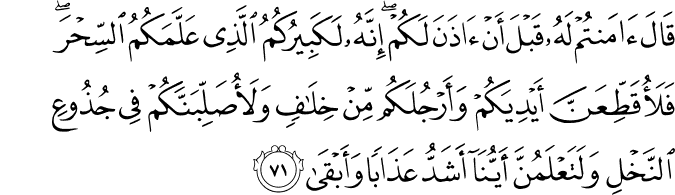

"(Pharaoh) said: "Believe you in Him before I give you permission? Surely this must be your leader, who has taught you magic! be sure I will cut off your hands and feet on opposite sides, and I will have you crucified on(In Arabic the word is في) trunks of palm-trees: so shall you know for certain, which of us can give the more severe and the more lasting punishment!"

This is just a short post in response to the terrible beliefs in regards to hating those who say that which Allah said about Himself, in that he Allah is above the sky, in a way that befits His Majesty. 


Saturday, October 6, 2012

Introduction to Aqeedah


The Sunnah has many meanings:


In the language:


1) To clarify

2) Way or road.

3) A normal custom

 In Islamic science it has the following meanings:

1)  In Fiqh: Something liked or if done the person is rewarded, but if left he is not punished.

2) In Usool al fiqh: One of the agreed upon portions of proof used in Islamic jurisprudence.

3) In Hadeeth: That which is connected to the Prophet in terms of his statements, actions, or things he accepted.

4) In Aqeedah: That which opposed innovation.

Al-Jama’ah:

1) Al-Ijtimaa’: The opposite of separation.

2) Al-Jama’: Name of a group of people.

3) Al-Ijma’a: Agreement upon a ruling

4) Al-Jama’at: A large number of people.

The Islamic meaning:

1) Al-Jama’ah: The companions of the Prophet Alayi Salatu wa Salam.

2) The scholars of guidance.

3) A group upon the truth, without separating.

4) The group of Muslims, the “Sawaad Al-‘Adham”.

5) The Islamic rulers and those who they place In charge of the affairs.

6) A group from amongst the people agreed upon something, like the Jama’ah of the masjid.

Ahlul Sunnah Wa Al-Jama’ah:

1) They are the companions of the Prophet (alayhi salam) and those who follow them in guidance.

2) They are Ahlul Hadeeth

3) Ahlul Athar

4) The righteous predecessors

5) The saved sect

6) The victorious group


Rules concerning the method of Ahlul Sunnah in understanding issues of Aqeedah


1) The Quran and Sunnah is the sources in which to turn back to.

2) Neglecting to enter into rhetoric or philosophy, and being sufficied with the Quran and Sunnah.

a) The salaf were careful as to only gain beneficial knowledge.

b) The Salaf forbid every type of innovation.

c) The Salaf wrote refutations against the innovators

3) The Sunnah is a proof, including reports with only one route. (Khabr Ahad)

4) Relying on the understanding of the Companions and those who followed after them.

5) Submission for that which comes from the revelations. While believing it is completely acceptable to the mind. (Al-Aql)

6) The negation of putting forward the understanding of innovators, or the mind before the texts.

7) In order to understand the texts, we must look at all the texts. Don't single one out without seeing others to explain it.

8) Understanding the Mutaashabih verses with the Muhkam verses.

Ustadh, Doctor: Sulaymaan bin Qaasim Al-Eid 

Friday, September 21, 2012

Where is Allah?

On the report of Mu'awaiya bin Al-Haakim As-Sulami that the Prophet said to Mu'aawiyas slave girl "Where is Allah?" So she said, "In the sky." The Prophet ('Alayhi Salaam) said, "Who am I?" So she said, "You are the Messenger of Allah." So the Prophet said, "Free her, for she is a believer." Reported by Muslim bin Al-Hujjaaj (Saheeh Muslim), Abu Dawood, Abu 'Abdullah Ar-Rahmaan an-Nasaa'i.

And from the most ignorant types of ignorance, the most stupid logic, and the most misguided of ways, are those who say "It is not permissible for someone to say "Where is Allah?" After it has become clear that the companion of the Islamic law (The Prophet: 'Alayhi Salatu Wa Salaam) said, "Where is Allah?"!

From the book: The Belief of the Haafidh, Abd Al-Ghani Al-Maqdisi Al-Hanbali, (Died in 600 Hijri)

Thursday, September 20, 2012

Placing the hands After Ruku'

Font size -  N  + 
Fatwas of Ibn Baz
Browse by Volume Number > Volume 11 > The Book of Salah: Section Two > Chapter: Description of Salah > Where should a person performing Salah place his hands after rising from Ruku`


Where should a person performing Salah place his hands


after rising from Ruku'? 

(Part No. 11Page No. 131)
All praise be to Allah. May peace and blessings be upon the Messenger of Allah, his family, and Companions! Many people from here and abroad inquire about the position of placing the hands after Ruku` (bowing). Thus, I opine to give a detailed answer for this out of sincere advice for Muslims, to display the truth, clarify ambiguity, and propagate the Sunnah (whatever is reported from the Prophet). In explanation, I can say that it was authentically established in the Sunnah of the Messenger of Allah (peace be upon him) that he used to place his right hand on his left forearm when he was standing in Salah (Prayer) and that he (peace be upon him) used to command Muslims to do so.
It was stated by Imam Al-Bukhari (may Allah be merciful to him) in his Sahih Book of Hadith (in the chapter entitled placing the right hand upon the left one) that `Abdullah ibn Maslamahreported from Malik, from Abu Hazim that Sahl Ibn Sa`d (may Allah be pleased with him) said: The people were ordered to place the right hand on the left forearm in Salah.
(Part No. 11Page No. 132)
Abu Hazim remarks: "I do not know but he attributed it i.e., the report, to the Prophet (peace be upon him)." 
It is argued that this authentic Hadith declares it an act of Sunnah to place the right hand upon the left one while standing in Salah both before and after Ruku` (bowing). Sahl said that people were ordered to place the right hand on the left forearm in Salah. It is known that it is an act of Sunnah for the one who is performing Salah to place the palms on the knees when in a state of Ruku`, and to place them on the floor by his shoulders or his ears when in the state of Sujud (prostration), and to place them on both his thighs and knees while in both the states of sitting between the two prostrations and reciting Tashahhud (a recitation in the sitting position in the second/ last unit of Prayer) according to what is explained in the Sunnah of the Prophet in this regard. Thus, it is only the position of standing that is not mentioned. Accordingly, it is concluded from the report of Sahl that it is such position that is meant. Thus, it should be clear that it is an act of Sunnah for the one who is performing Salah to place his right hand over his left forearm while in the state of standing up in his Salah, whether standing both before or after performing Ruku` (bowing), because it was not reported from the Prophet (Peace be upon him) that he differentiated between them as far as we know. As for a person who differentiates between them, he has to bring evidence for this.
It is authentically reported in the Hadith related by Wa'il Ibn Hujr on the authority of An-Nasa'i with an authentic chain of narrators that Whenever the Prophet (peace be upon him) stood up in Salah, he used to place his right hand on his left one. There is another narration also related by both An-Nasa'i and Abu Dawud with an authentic chain of narrators
(Part No. 11Page No. 133)
on the authority of Wa'il who said: I saw the Prophet (peace be upon him) after he pronounced Takbirat-ul-Ihram (saying: "Allahu Akbar [Allah is the Greatest]" upon starting Prayer) placing his right hand over the back of his left hand, wrist and forearm. Such is an obvious and authentic explanation on the posture of the person who is performing Salah during standing up in Salah i.e., to place his right palm on the back of his left hand, wrist, and forearm. There is no difference stated between standing up before or after Ruku'. Thus, it is evident that the Hadith is applied to both cases. His authority Al-Hafizh Ibn Hajar (may Allah be merciful to him) said in his book Fath Al-Bari (a commentary on Sahih al-Bukhari) while commenting on the title of the relevant report: "His saying 'chapter on placing the right hand upon the left in Salah' refers to the position of standing up. His saying 'people were commanded' refers to that it was the Prophet (peace be upon him) who gave them orders as will be explained later.
His saying: "upon his arm" did not define the specific part of the arm. The Hadith related by Wa'il and recorded by Abu Dawud and An-Nasa'i clarifies it: 
Then, he placed his right hand over the back of his left palm, wrist, and forearm. Ibn Khuzaymah and others ranked it as Hadith Sahih (a Hadith that has been transmitted by people known for their uprightness and exactitude; free from eccentricity and blemish). The source of this Hadith is found in Sahih Muslim without the addition. The wrist is the joint between the hand and the forearm. Another report will be cited in the last part of Salah Issues but it does not specify the parts of body whereupon the hand is placed either. Ibn Khuzaymah also related on the authority of Wa'il that the Prophet placed them on his chest whereas Al-Bazar's narration states that the Prophet placed them by his chest.
Imam Ahmad stated the same thing in the Hadith related on the authority of Hulb Al-Ta'iy.
(Part No. 11Page No. 134)
In Ziyadat al-Musnad (a book compiled by `Abdullah the son of Imam Ahmad), it is stated through the Hadith related by Imam `Aly that the Prophet placed them under the navel. Yet its chain of narrators is weak. There is an objection on the part of Al-Dany mentioned in Atraf Muata' Malik: "This is just a guess on the part of Abu Hazim." In reply, if Abu Hazim did not say: "I but know...", then the Hadith would be still regarded as Hadith Marfu` (a Hadith narrated from the Prophet with a connected or disconnected chain of narration), because the saying of a Companion: "We were commanded to do such-and-such", obviously refers to the person who has the authority to give orders i.e., the Prophet (peace be upon him). This is because the Companions are revealing the rulings of Shari`ah (Islamic law) and then they convey the teachings of the law-giver i.e., the Prophet. This is similar to the statement of `Aishah: "We were ordered to make up for the days of Sawm (Fast) we have missed." It means that the Prophet (peace be upon him) is the one who gave the order. It is stated by Al-Bayhaqy that there is no disagreement among narrators in this regard. And Allah knows best.
Additionally, a supporting report is narrated in Sunan of Abu Dawud and An-Nasa'i and Sahih Ibn As-Sakan that could help in determining the person giving the order and the one receiving it. It is narrated that Ibn Mas`ud (may Allah be pleased with him) said: The Prophet (peace be upon him) saw me when I was placing my left hand on my right hand. He made me place the right hand on the left one. Its Isnad (chain of narrators) is good. It is argued that had the Hadith related by Abu Hazim been Marfu` (a Hadith narrated from the Prophet with a connected or disconnected chain of narration), then he would not have needed to say "I but know..."
In reply, he wanted to transfer from implicit to explicit expression because without such a comment on the part of Abu Hazim, the Hadith will not be Marfu` but still has the same effect of Marfu`. Scholars state that the wisdom behind such a mode (i.e. placing one's hands in such a mode) is that it is the manner befitting the humble servant who beseeches his Lord i.e., to prevent him from being restless and bring him Khushu' (the heart being attuned to the act of worship). It seems that Al-Bukhari (may Allah be merciful to him) noticed this. Thus, he followed this chapter by a chapter on Khushu'. It was
(Part No. 11Page No. 135)
said: "Heart is the place of intention and it is customary that when one wants to preserve something, one puts one's hands on it."
It is stated by Ibn `Abdul-Bar: "There is no difference concerning this issue in the reports from the Prophet (peace be upon him). Moreover, it is the opinion adopted by the majority of the Sahabah (Companions of the Prophet) and the Tabi`un (Followers, the generation after the Companions of the Prophet), and is stated by Malik in Al-Muwatta'. Ibn Al-Mundhir or others only reported that from Malik. Yet, Ibn Al-Qasim related from Malik that he adopted the viewpoint of releasing one's hands. This was adopted by the majority of his followers. Another viewpoint differentiating between the obligatory and the supererogatory Salah (Prayer) is also attributed to Malik. Some of them also hated holding one's hands during Salah. It is reported by Ibn Al-Hajib that this is when one holds one's hands deliberately with the intention to relax oneself." This is a precise and concise explanation of the issue. The statement of Imam Ibn `Abdul-Bar proves that placing the right hand on the left hand during standing in Salah is the opinion adopted by the majority of scholars. There is no differentiation on the part of Ibn `Abdul-Bar (may Allah be merciful to him) between the two cases. As for what was stated by Imam Al-Muwaffaq in his book Al-Mughny, the author of al-Furu’ (i.e., Ibn Muflih, the student of Sheikh al-Islam Ibn Taymiyyah), as well as others on the authority of Imam Ahmad (may Allah be merciful to him) that he opines that the one who is performing Salah has the choice either to release his hands or to hold them upon standing erect after Ruku' (bowing), I know of no legal evidence supporting this. On the contrary, it is obvious through the authentic Hadiths mentioned above that it is an act of Sunnah to hold one's hands in both cases. The same applies to what was stated by some Hanafy jurists who preferred releasing one's hands during the standing posture following Ruku`. This is baseless, because this contradicts the Hadiths mentioned above. When juristic preference goes against the Hadiths, this preference will be unreliable as stated by scholars.
(Part No. 11Page No. 136)
As for what was reported by Ibn `Abdul-Bar from the majority of the Maliky scholars who preferred releasing one's hands, he means by this both cases i.e., before and after Ruku` (bowing). There is no doubt that this opinion is overweighed and contradicts the authentic Hadiths and the opinion adopted by the majority of scholars as previously explained. Both the Hadiths related by Wa'il Ibn Hujr and Hulb Al-Ta'iy indicate that it is better to place one's two hands upon the chest while one is standing in Salah. Both the Hadiths were mentioned by Al-Hafizh as stated above. The two Hadiths are good and have an acceptable chain of narrators. The first i.e., that was related by Wa'il was reported by Imam Ibn Khuzaymah (may Allah be Merciful with him) who judged it to be authentic. It was also mentioned by Al-Shawkany in his book Nayl Al-Awtar. The second Hadith related by Hulb was recorded by Imam Ahmad (may Allah be merciful to him) with a Hasan Isnad (a Hadith whose Isnad contains a narrator with weak exactitude, but is free from eccentricity or blemish). It was also related by Abu Dawud (may Allah be merciful to him) on the authority of Tawus from the Prophet (peace be upon him) what matches the Hadith related by Wa'il and Hulb. Such a Hadith is Mursal (a Hadith with no Companion of the Prophet in the chain of narration) and reliable. If one said: "Abu Dawud narrated on the authority of `Aly (may Allah be pleased with him): 'It is an act of Sunnah to place the two hands under the navel during prayer,' the reply is that this is a weak Hadith as stated by Al-Hafizh Ibn Hajar in his words mentioned above (may Allah be merciful to him). The reason behind its weakness is that it is related by `Abdul-Rahman ibn Is-haq Al-Kufy, who is also called Al-Wasity. His narrations are weak and cannot be relied on according to scholars. He was judged as weak by Imam Ahmad, Abu Hatim, Ibn Ma`in, and others. The same applies to the Hadith related by Abu Hurayrah on the authority of Abu Dawud that is judged as Marfu`: The established way of folding hands is to hold one hand on the other hand below the navel. This is because its Isnad includes `Abdul-Rahman ibn Is-haq. We have just mentioned such a person and identified his condition.
The following text was stated by Sheikh Abu Al-Tayyib
(Part No. 11Page No. 137)
Muhammad Shamsul-Haqq 
in his book `Awn Al-Ma`bud Sharh Sunnan Abu Dawud said after mentioning many things in this regard: "The Hadith Mursal (a Hadith with no Companion of the Prophet in the chain of narration) related by Tawus, Hulb, and Wa'il Ibn Hujr all indicate the desirability of placing the two hands upon the chest. This is the truth. As for placing them either below or above the navel, there is no authentic Hadith reported from the Messenger of Allah (peace be upon him) in this regard." I adopt such opinion stated by the Shaykh (may Allah be merciful to him) regarding the mentioned Hadiths.
If it is argued that the following text is stated by Shaykh Muhammad Nasir Ad-Din Al-Albany in the footnote of his book "Sifat Salat An-Naby (peace be upon him)" page (145) in the sixth edition: "I have no doubt that placing the two hands upon the chest in this standing (i.e. standing after Ruku') is a misleading Bid`ah (innovation in religion), because this was not mentioned at all in any of the Hadiths on (describing) Salah though they are numerous. Had this had any origin, it would have been reported to us even through just one means. This is supported by the fact that this was neither performed by any of the Salaf (righteous predecessors) nor was mentioned by any of the scholars of Hadith, as far as I know." In reply to what our brother scholar Shaykh Nasir Al-Din stated in the footnote of his mentioned book:
First: His affirmation that placing the right hand upon the left hand when standing after Ruku' is a misleading Bid`ah is an obvious mistake that no one ever adopted among
(Part No. 11Page No. 138)
the scholars, as far as we know. It is contradictory to the authentic Hadiths mentioned above. I do not have the least doubt regarding his comprehensive knowledge, virtue, and concern with the Sunnah. May Allah grant him much more knowledge and success! Yet he has committed an obvious mistake in this issue. The opinions of any scholar can be accepted or refuted as stated by Imam Malik ibn Anas (may Allah be merciful to him): "Our opinions can be accepted or refuted except for the sayings of the one who is buried in this grave." He meant the Prophet (peace be upon him). Such is the viewpoint of all scholars before and after him. Yet this neither degrades nor belittles them at all. Rather, they are entitled to have either one or two rewards. This is according to the Sunnah of the Prophet (peace be upon him) regarding the Mujtahid (jurist who practices independent reasoning): The one who is correct will receive a double blessing and the one who is wrong will receive one reward.
Second: The one who thinks about the Hadiths mentioned above i.e., the Hadith related by Sahl, and that related by Wa'il ibn Hujr, and others, will realize that they indicate that it is an act of Shari`ah to place the right hand upon the left hand when standing in Salah both before and after Ruku` (bowing), because there is no details differentiating between the two states so the original case, i.e., placing the right hand upon the left hand, prevails.
The commandment of placing the right hand on the left forearm during Salah was stated also in the Hadith reported by Sahl. Yet,
(Part No. 11Page No. 139)
it is not explained when to do so while in Salah. If we contemplate what is related in this regard, it will be clear to us that it is an act of Sunnah to place the palms on the knees when in a state of Ruku`, to place them on the ground when in a state of Sujud (prostration), and to place them on both one's thighs and knees while in the state of sitting. Thus, it is only the posture of standing that is not mentioned. Accordingly, it is inferred from the Hadith related by Sahl that it is such posture that is meant. This is very clear.
As for the Hadith related by Wa'il, there is a declaration on the part of Wa'il (may Allah be pleased with him) that he saw the Prophet (peace be upon him) holding his left hand with his right one when he was standing in Salah. It was reported by An-Nasa'i with an authentic chain of narrators. Such wording given by Wa'il implies the standing in the two positions. As for the one who differentiates between them, he is obliged to present evidence for this. We have already referred to this at the beginning of this article.
Third: Scholars state that the wisdom behind placing one's right hand on his left hand is that this brings one closer to Khushu' (the heart being attuned to the act of worship) and humility and prevents him from being restless. This was discussed earlier in the opinion of Al-Hafizh Ibn Hajar. Since the one who is performing Salah should observe this meaning before and after Ruku` (bowing), it is impermissible to differentiate between the two postures except when a differentiating authentic text exists, which would be inevitably adopted.
As for the saying of our brother scholar: "This was not mentioned at all in any of the Hadiths on (describing) Salah though they are numerous. Had this had any origin, it would have been reported to us even through just one means," our reply is that it should be said that the matter is not so. Rather, what indicates this was actually reported in the Hadith related by Sahl,Wa'il, and others as mentioned above. As for the one who excludes the posture of standing after Ruku' has to raise the reliable evidence in support of this exclusion.
(Part No. 11Page No. 140)
As for his saying (may Allah grant him success): "This is supported by the fact that this was neither performed by any of the Salaf (righteous predecessors) nor was it mentioned by any of the scholars of Hadith, as far as I know," our reply is that such a claim is very strange, because it lacks evidence that none of the Salaf (righteous predecessors) performed it. Rather, this is the very evidence that they used to hold their hands when standing after Ruku' (bowing), because had they performed other than that, this would have been reported to us and because the Hadiths mentioned above indicate that it is an act of Shari`ah to hold one's hand when standing in Salah, whether before or after Ruku'. This is what is implicated from the title that Imam Al-Bukhari (may Allah be merciful to him) gave as we have mentioned at the beginning of this article. The speech of Al-Hafizh Ibn Hajar implies the same meaning. Had any of the Salaf (righteous predecessors) performed other than that, this would have been reported to us. Moreover, it was not reported from the Prophet (peace be upon him) that he released his hands when standing after Ruku`. Had he done so, this would have been reported to us because the Companions (may Allah be pleased with them) reported from the Prophet what is less important than this regarding his sayings and actions (peace be upon him). It was discussed earlier in the opinion of Ibn `Abdul-Bar (may Allah be merciful to him) that nothing contradictory to holding the hands was reported from the Prophet (peace be upon him). Al-Hafizh affirmed such an opinion and we know of no narration proving anything else. According to what we have stated, it should be clear that what was stated by our brother Shaykh Muhammad Nasir Al-Din in this issue is a proof against him, not supporting him when pondering and considering the rules followed by scholars. May Allah forgive us and him! May He grant us all forgiveness! Perhaps, after reading what we have stated in this article, the truth will be clear to him. He could return to it, because the truth is the sought-after goal.
(Part No. 11Page No. 141)
Whenever a believer finds it, he adopts it. Praise be to Allah, the Shaykh is one of those who seek the truth and exert much efforts to make it clear and call for it.


An important note
It should be known that the research mentioned above on holding the left hand with the right one and placing them both on the chest or any other place either before or after Ruku` (bowing), is an act of Sunnah, not obligatory according to scholars. Thus, if anyone performs Salah with his hands released and does not hold them before or after Ruku` (bowing), his Salah is valid but he left what is better to do in Salah. Thus, none of the Muslims should exploit the disagreement on this issue as well as similar issues taking them as a means to dispute, separation, and dissention. This is not permissible for Muslims even when it is stated that holding the hands is obligatory as opted for by Al-Shawkany in the book of Nayl Al-Awtar. Rather, it is obligatory for all Muslims to exert their efforts to cooperate in righteousness and piety, to explain the truth through evidence, and to be keen on achieving the purity of hearts and keeping them safe from rancor and malice. It is obligatory also to beware of what leads to separation and dissention, because Allah (Glorified be He) made it obligatory for Muslims to hold fast, all of them together, to the Rope of Allah (i.e., this Qur’an), and be not divided among themselves. Allah (Glorified be He) said: And hold fast, all of you together, to the Rope of Allâh (i.e. this Qur’ân), and be not divided among yourselves
(Part No. 11Page No. 142)
The Prophet (peace be upon him) said: Three things are pleasing to Allah when you do them and three are displeasing: It pleases Him that you worship Him and do not associate anything with Him, and that you take hold of the rope of Allah altogether, and that you give good counsel to the one to whom Allah gives command over you.
I came to know that hatred and dissention arise between many of my Muslim brothers in Africa and other places due to the issue of holding one's hands and releasing them during Salah. There is no doubt that this is Munkar (that which is unacceptable or disapproved of by Islamic law and Muslims of sound intellect). They should not do that. It is obligatory upon all Muslims to advice and debate with one another so as to present the proofs that enable them know the truth within the frame of mutual love, purity, and Islamic brotherhood. The Companions of the Messenger (Peace be upon him) and scholars after them (may Allah be Merciful with him) used to differ regarding secondary matters. Yet, this did entail neither separation nor dissention between them, because the aim of each one of them was to know the truth through presenting evidence. Once it became clear before them, they would unanimously agree to it. When it did not reach the knowledge of any of them, they did not accuse their brothers with going astray, abandon or desert them or refuse to offer Salah behind them due to this. Thus, it is obligatory for all Muslims to fear Allah (Glorified be He) and follow the way of the righteous predecessors preceding us who adhered to
(Part No. 11Page No. 143)
the truth, religious brotherhood, and turned away from desertion and dissention over secondary matters where evidence may be ambiguous and juristic reasoning may lead to different views.
May Allah with His Most Beautiful Names and Sublime Attributes increase us and all Muslims in guidance and success! May He grant us all sound understanding of Islam and support us to abide by, support, and call others to it! He is the One Capable of doing so. May Allah's Peace and Blessings be upon our Prophet Muhammad, his family, and Companions, and those who follow his guidance and honor his Sunnah until the Day of Judgment!

President of the Islamic University

in Al-Madinah Al-Munawwarah.


  Back     Next   


___________________________________________________________

http://www.alifta.org/Fatawa/fatawaDetails.aspx?View=Page&PageID=1776&PageNo=1&BookID=14