Showing posts with label Clarifications of Misconceptions. Show all posts

Wednesday, February 12, 2014

A response to those who allege that Imam At-Tabari did Ta'weel of the word 'kursi'.


بسم الله الرحمن الرحيم 

Understanding the explanation of the Kursi (Footstool) of Allah according to the opinion of the righteous early Muslims and those who followed them in that which is correct. 

Allah says;


As translated in the English language; 


"Allah! There is no god but He,-the Living, the Self-subsisting, Eternal. No slumber can seize Him nor sleep. His are all things in the heavens and on earth. Who is there can intercede in His presence except as He permitteth? He knoweth what (appeareth to His creatures as) before or after or behind them. Nor shall they compass aught of His knowledge except as He willeth. His Kursi doth extend over the heavens and the earth, and He feeleth no fatigue in guarding and preserving them for He is the Most High, the Supreme (in glory)."2-255


So here Allah says, His kursi doth extend over the heavens and the earth, so the question is, what is the meaning of kursi, and how did Allahs Messenger (صلى الله عليه و سلم) and the Companions (رضي الله عنهم) believe in it?  

At-Tabari (310 Hijri, رحمه الله) the exemplary scholar of Qur'an exegesis, as mentioned in his explanation of this verse,  is of the opinion that "kursi " means Allahs knowledge, and by believing so, it is alleged that he broke away from the crystal clear belief of the Early Righteous Predecessors (Salaf-as-Saalih) in regards to the Attributes of Allah (Sifaat), and did Ta'weel (blameworthy interpretation) of the verse away from it's apparent meaning, however this accusation against the Imam can easily be dismantled. Which will come shortly. 


So Imam At-Tabari said: 

“And for all of these explanations (that he previously mentioned in his tafseer regarding the word kursi) there is a point of view and a methodology, however if it were to be explained (Taweel, here meaning Tafseer), then that which comes first in explaining it is the saying of the Prophet (صلى الله عليه و سلم):


Where Umar (رضي الله عنه) said:

“A woman came to the Prophet (صلى الله عليه و سلم) and said to him, “Call upon Allah so that He enters me into Paradise.” The Prophet (صلى الله عليه و سلم) glorified the Lord (Allah) and said, “His Kursi  is above the heavens and earth, and He is upon it (يقعد عليه), so that there remains on the Kursi the space of 4 fingers,“ Then he shown four of his fingers together, and said, “And it has a sound, the sound similar to a new saddle if one were to ride on it.” 


Imam At-Tabari goes on to say: 

"The outward wording of the Qur’an (Dhaahir) indicates the correctness of the saying of Ibn Abbas narrated by Ja’far bin Abi Al-Mughira on the authority of Sa’eed bin Jubair that says, that Ibn Abbas said Kursi means His (Allahs) knowledge, and this is because of the statement of Allah, “and He feeleth no fatigue in guarding and preserving them“, and He informed us that He feeleth no fatigue in preserving (all) that He knows, and He encompasses (all things) with it (His knowledge) (all) that is in the heavens and earth. Similar to how He informed us concerning the angels in that they said in their supplication. “Our Lord! Thou embracest all things in mercy and knowledge” -40:7. 

So Allah mentioned that His Knowledge (Kursi) extends over the heavens and the earth, and the origin of Al-Kursi, is Knowledge (Linguistically), and in regards to this being known linguistically (The word Kursi) is said in some newsletters in which knowledge is written in booklet form.(Kuraasa)“-end of the quote of Imam At-Tabari.

However there are multiple points here that prove that neither Ibn Abbas nor At-Tabari did Ta'weel (Blameworthy Explanation) that changes the apparent meaning of the word, from them are: 

1) The narration that Imam At-Tabari  first mentioned of Umar (رضي الله عنه), in regards to being more correct when explaining the verse is authentic, it is mentioned in "Al-Ibaana al-Kubraa"-by Ibn Al-Batta (387 Hijri, رحمه الله), and it's mentioned that this narrations chain is authentic similar to that of Al-Bukhaari and Muslim. So if this is true, then according to this narration the word "Kursi" can also hold the same meaning as "Al-Arsh"-Throne, which is in fact linguistically possible, and if the narration is authentic (Saheeh), then there is no problem with describing the throne (Al-Arsh) as Kursi (Meaning throne), and this "Ta'weel" mentioned by Imam At-Tabari here using the narration of Umar is considered explanation (Tafseer) that is acceptable not reprehensible. 

2) The narration of Ibn Abbas concerning him saying "Al-Kursi" meaning knowledge, includes in it's chain Ja’far bin Abi’l-Mugheerah who has some weakness, al-Haafidh Ibn Hajar summarized the ruling on him by saying “Sudooq (truthful), but makes mistakes” and the likes of these individuals are unacceptable to take sole narrations from alone, according to the Scholars of Hadeeth. This is especially the case in regards to those who report a lot from Sa’eed bin Jubayr. For if such a narrator adds something which opposes the trustworthy (Thiqaat) who reported a lot from the companions of Sa’eed bin Jubayr then there is no doubt that the specific ruling on such a narrator is that he has erred and reported something strange (shaadh), as is the case here.


A) Ja'far bin Abi Al-Mugheerah went against those who are more reliable than him in regards to this narration, by the way of Sa'eed bin Jubair

Muslim Al-Bateen reported on the authority of Sa'eed bin Jubair on the authority of Ibn Abbas that he said "His Kursi (footstool) is the place of His (Allahs) feet."-And Al-Haakim said this narration is authentic (Saheeh) according to the conditions of Al-Bukhaari and Muslim.


3) Even if we accept that Imam At-Tabari  believed the narration of Ibn Abbas to be acceptable that Kursi is Allahs Knowledge ('Ilm) this still can't be used as proof for the companions doing Ta'weel (Dispraised Explanation) that Ahl As-Sunnah consider incorrect, and here is why: 

a) Imam At-Tabari says that the APPARENT (Dhaahir) meaning of the verse attests to the fact that Kursi means knowledge, and then he is using the narration of Ibn Abbas (although having weakness) and the Arabic language to further solidify his point, by saying that the ORIGIN of the word Kursi means knowledge. So if the origin of the word Kursi means knowledge, and he is taking this word upon it's apparent meaning, this is NOT Ta'weel (Blameworthy Explanation) that is disliked by Ahl As-Sunnah, even if he was wrong in his assessment. Because we as Ahl As-Sunnah agree that the true original Arabic language of the Arabs before and during the time of the Prophet (صلى الله عليه و سلم) is the Arabic that can be used to explain the Qu'ran.

b) If we accept that Kursi here means Allahs knowledge, that means that it is an attribute of Allah (Sifah), and by accepting it upon it's apparent meaning (by saying the origin of the word Kursi means knowledge) he is doing exactly what other than him have done by accepting and confirming the attributes of Allah how they came upon their original Arabic meaning without changing, or negating. 

c) If we say that Kursi here doesn't mean Allahs knowledge, rather it is a creation of Allah, and is the footstool (and this too is linguistically possible), then this too is not changing the meaning (Blameworthy Ta'weel) rather it is taking it upon it's apparent meaning ('Alaa Dhaahirihi), according to how the Arabs understood it, according to the Authentic Narration (Saheeh hadeeth) quoted above. 

d) If it was an explanation from Footstool/Throne to Knowledge of Allah, then this wouldn't be a good example of the Ta'weel (Explanation) that those who encourage Ta'weel (Blameworthy explanation) are trying to prove, because:

1) At-Tabari already explained this is the apparent meaning of the verse and not explanation (Ta'weel), and never denied (rather confirmed indirectly) that kursi can have multiple meanings.

2) There is no proof to say that the companions changed the meaning of kursi in other narrations to mean other than knowledge and thus, Instead of changing a confirmed attribute of Allah that may lead to anthropomorphism (In the minds of those who allege so), to a better, less controversial meaning (for example they would explain Yadd Allah (hand) as power (Quwa) which is no doubt an attribute), they are now taking a word that can linguistically mean Throne or Footstool (Not at all an attribute if used in the proper context as proven in authentic reports) and saying it only means the knowledge of Allah, which in actuality is going a step further and doing the exact opposite of what their foundations tell them to do, which is "Changing the first meaning or selecting a secondly meaning for an Attribute of Allah (which gives them doubts) away from it's apparent meaning in order to remove the (supposed) likelihood of making a similitude between Allah and the creation, so that Allah is exalted by doing so."-In short, by saying that the definition of kursi means knowledge, now we are left needing other explanation as to why it has been explained in authentic narrations that kursi  (Allahs knowledge according to them) is smaller in size than the Throne? Otherwise, they have forced people to commit kufr and fall into the same mistake they attempt to get them out of (supposedly) in regards to other attributes.

Rather we say;

-It's possible words can be confirmed upon their apparent meanings and still be considered explanation, and we Ahl As-Sunnah agree with that if it's done with proof from the Prophet (رضي الله عنهم) or His Companions.(رضي الله عنهم)

- The Companions and early pious Muslims didn't do ta'weel (blameworthy explanation) that changed the meaning of the word away from it's apparent meaning, and the apparent meaning of the word comes about in the context of the sentence according to classical Arabic. In the case of issues related to the unseen, the concept of silence and of stopping where the texts have stopped comes into affect, and this is the Methodology of the Salaf.

-Here (If we follow common sense) they are saying that a word that CAN mean Throne/Footstool (a creation and proven in other authentic reports), IS His knowledge (an attribute), essentially going into the same problem that they themselves are trying to get out of. Is this not, according to their foundations, confirming for Allah an attribute that will lead the innocent minds of the Muslims to disbelief via anthropomorphism? That according to them Allahs Attribute of Knowledge was (Throne/Footstool) and then Ibn Abbas did ta'weel (explanation) away from the apparent meaning, to a less controversial meaning? So by Ibn Abbas saying that the word kursi here means knowledge, then we must ask well then where is the Ta'weel of the other narrations where the Kursi is compared in size to The Throne? If no such ta'weel exist then you are now saying that the kursi is Allahs knowledge and the knowledge of Allah is smaller than the creation?  Why not take the safer way out and just say it is NOT an attribute in any verse or narration, so as not to put the Muslims into disbelief? Rather do actual explaining (If according to them the origin is knowledge) and say it means only Footstool (Since this would be their ta'weel) as to not cause the Muslims to fall into anthropomorphism? Or that kursi is not always knowledge, when in proper context according to the format of the sentence and meaning, which is always how Ahl As-Sunnah have understood the Qur'an and Sunnah/

So if I read for example that Allahs Throne is larger than His kursi, and I should believe that His kursi is His knowledge (According to them), am I not now faced with the same dilemma that they try to get us out of? Am I not now forced to believe (according to their opinion) that I am saying the creation is larger than an attribute of Allah? (May Allah protect us from such an atrocious belief)

If you are not saying that the Kursi is always knowledge you then agree that words have different connotations according to the understanding of the sentence, and the early pious Muslims always took them upon their apparent meaning, thus NOT making them those who do not know the correct meaning of the attributes of Allah (Mufawidheen) nor of those who change them with  blameworthy explanation via Ta'weel.

By them staying silent in the issues of comparing the size of the kursi to the throne, and by not bringing us further explanation of those narrations, you have forced people to commit disbelief. (By saying that kursi only means Knowledge), or you agree that the companions understood the words that are related to attributes upon their apparent meaning without the need for blameworthy explanation (Ta'weel).

If you are agreeing that the narrations are taken upon their apparent meaning, without explanation and without relinquishing the entire meaning to Allah, you have agreed with the Methodology of the early pious Muslims (Salaf) and those who follow them. (Agreeing that it's possible kursi can either mean knowledge, footstool, or throne, according to the understanding of the Arabic language and authentic narrations of the Prophet -صلى الله عليه و سلم- or his companions)

e) How can we accept the statement of At-Tabari (Even if it's linguistically possible) when there are other stronger narrations to rely upon? And even if we did rely upon his explanation, that still wouldn't be considered a disliked explanation (BlameworthyTa'weel ) rather it would be Tafseer (explanation) of the Qur'an by the original language of the Arabs (with proof that he used) because according to him, that is the original meaning of the word. Rather, even if we agreed that Kursi  can linguistically mean Knowledge, and that it is the (Only) correct explanation of Kursi  in this verse (2:255) we, Ahl As-Sunnah haven't fell into any problem whatsoever, because, according to the statement of At-Tabari  this would be the Apparent meaning of the verse, with proof (in his opinion) to back up his statement. 

However, point being, in light of there being multiple narrations and explanations, one should return back to that which is stronger, and that is the saying that it is the Footstool (In 2:255), yet those who do not even accept authentic narrations that are singular (Al-Ahaad) when it comes to Belief (Aqeedah), want us to rely upon narrations that have weakness when stronger narrations exist?

f) By saying Imam At-Tabari confirmed that Kursi means knowledge upon it's apparent meaning, they themselves are admitting that Imam At-Tabari did NOT relinquish the meaning of the attributes to Allah alone, rather he confirmed the apparent meaning of it, even when the word had multiple meanings. 

4) Understanding the word Kursi to ONLY mean knowledge, would not be possible and this is because of numerous authentic narrations negating that it can only mean so.

a) The one we mentioned above of Umar, and this is because here Kursi is used as Throne. 

b) The Narration of Mujaahid (رحمه الله) which is Mursal, in which he said: 

"What is the Kursi (Footstool) in comparison to the 'Arsh (Throne) except that it (The kursi) is like a ring (that one wears on his finger) thrown into an open country."-Graded Authentic (Saheeh) by Ibn Hajr

-In this narration, the Kursi (Footstool) is NOT the Throne, because The Throne (Al-Arsh Al-Majeed) is said to be larger in size. 

-Is not considered to be knowledge because if Kursi here meant Allahs knowledge, it would mean that the creation (The Throne of Allah) is larger in size than His Attribute of Knowledge(We Seek refuge in Allah from such a wicked belief).

-Is neither, His Knowledge, Nor the Throne, rather if we return back to the Authentic narration we will see that it is in reference to the Footstool.


In summary,

1) The narration of Ibn Abbas that Imam At-Tabari used as proof has weakness, thus stronger evidences have to be used as proof for the meaning of kursi.

2) Imam At-Tabari didn't believe knowledge to be the explanation (Blameworthy Ta'weel) of the word kursi, rather he believed that to be THE APPARENT meaning of the word according to the Arabic language, and used a narration having weakness of Ibn Abbas to strengthen his argument.

3) If this is the case, then this further solidifies our argument that the early righteous Muslims were neither those who didn't understand the meaning of the attributes upon their apparent meaning (not Mufawidheen), nor those who changed them with a blameworthy explanation (Ta'weel).

4) If made to believe that knowledge is the only meaning of kursi, we are faced with a dilemma as to why in authentic narrations the early righteous Muslims compared the size of the Throne to the Kursi (Alleged to be only knowledge) and said the throne is larger, and never explained them away from their alleged apparent meaning of knowledge when it could make a person commit disbelief. This proving that the early righteous Muslims could not have been those who didn't understand the attributes of Allah (or didn't know which meaning from among the many meanings was the intended meaning of Allah), nor of those who explained them with a blameworthy explanation, especially when no such authentic narrations reach us in regards to any of these attributes. Rather it becomes clear that the apparent meaning is clear from disbelief in any and all circumstances.

5) Essentially there is no problem in believing that the word kursi itself can mean knowledge, or throne, or footstool or other than that, because they all may have origins in the Arabic language, and would be taken into consideration when understood in the context of the sentence (Verse or Narration), and then be looked at under the scope of which narration is more authentic than the other. However, none of this would be blameworthy explaining (Ta'weel) rather it would be considered taking it upon the apparent meaning.

6) Even we were to say it is ta'weel it would NOT be the same ta'weel (explaining) the Ashairah/Maaturidiyah do when it comes to for example the Hands of Allah or Face or Rising, because their whole purpose of doing ta'weel of Hand to Power is to make sure the Muslim doesn't commit disbelief by the way of anthropomorphism. So what is the purpose of doing ta'weel of Kursi (CHAIR, FOOTSTOOL) to KNOWLEDGE by Ibn Abbas? Because if we left it as Chair or Footstool, that has nothing to do with the attributes of Allah and would NOT be problematic for a Muslim and not cause him to become an anthropomorphisist, and thus these would be two types of ta'weel and it would not be possible to to extract from this ta'weel, the permissibility of doing it to the Attributes of Allah.

7) The whole argument to begin with is a fallacy called "Straw man" In that they are building their argument using false pretenses, and making it seem as though that was our argument to begin with. Rather, even if the narration of Ibn Abbas saying Kursi means Knowledge was absolutely authentic, or any other scholar saying so, it doesn't matter, because as testified by At-Tabari that is the linguistic origin of the word kursi, and thus that is NOT ta'weel. However, in order to confirm this is in fact the correct explanation (Tafsir) of Kursi then we need authentic narrations, but for discussions sake, we are just pointing out that the argument itself is a straw man.


And Allah knows best. 

May Allah send peace and blessings upon our Prophet Muhammad, and upon his family and all of his companions, and May Allah have mercy upon all of the scholars and all of the Muslims.



Tuesday, April 2, 2013

Allah is above the sky.

Allah Subhaana Huwa Ta'laa Says in the 67th chapter and the 16th verse of the Qur'an:


"Do you feel secure that He Who is in heaven will not cause you to be swallowed up by the earth when it shakes (as in an earthquake)?"


And At-Tabari Said in his tafseer "He who is in the heaven." Meaning He is Allah. 

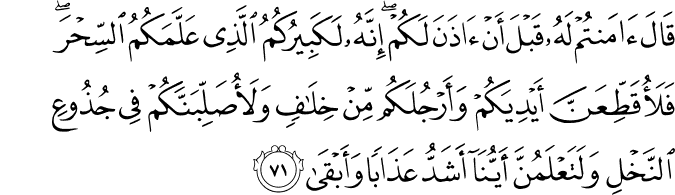
And know that from the linguistic uses of the word "في:in" is "على:on or upon" as Allah Subhaana Huwa Ta'alaa said in the 20th chapter in the 71st verse of the Qur'an:


"(Pharaoh) said: "Believe you in Him before I give you permission? Surely this must be your leader, who has taught you magic! be sure I will cut off your hands and feet on opposite sides, and I will have you crucified on(In Arabic the word is في) trunks of palm-trees: so shall you know for certain, which of us can give the more severe and the more lasting punishment!"

This is just a short post in response to the terrible beliefs in regards to hating those who say that which Allah said about Himself, in that he Allah is above the sky, in a way that befits His Majesty. 


Thursday, July 5, 2012

False Accusations Against the Hanaabilah


 I decided to write this after being falsely accused of kufr by not following Imam Ahmad in the "correct way", In which case the person posted this Article to show what Imam Ahmad "Really" believed. I realize the article is old, however, the age of it doesn't prevent people from relying on it, and even though I didn't search to find if it was ever answered, Insha'a Allah what I wrote here will benefit people in order to expose the  mistakes the Original author presented as the truth. From here on out the Color RED in Italic font will symbolize the Original Authors words.

Nuh Ha Mim Keller Said:
""Regarding the question of whether Imam Ahmad ibn Hanbal (d. 241/855) was an anthropomorphist, this is something that has been asked since early times, particularly since someone forged an anthropormorphic tract called Kitab al-sunna [The book of the sunna] and put the name of Imam Ahmad’s son Abdullah (d. 290/903) on it.I looked this book over with our teacher in hadith, Sheikh Shu‘ayb al-Arna’ut, who had examined it one day, and said that at least 50 percent of the hadiths in it are weak or outright forgeries. He was dismayed how Muhammad al-Qahtani, the editor and commentator, could have been given a Ph.d. in Islamic faith (‘aqida) from Umm al-Qura University in Saudi Arabia for readying for publication a work as sadly wanting in authenticity as this.  Ostensibly a "hadith" work, it contains some of the most hard-core anthropomorphism found anywhere.....""

   To proclaim the work is forged simply because someone disagrees with some of the content is incorrect, as is known this work is a work of Hadith and as was often done All of the sayings were combined and kept in order to preserve them, regardless of whether or not they were Saheeh or otherwise, simply by putting the hadith in the book doesn't make the Author not the Author, nor does it make the Author an anthropomorphist (As is claimed by Al-Kawthari) 

The fact of the matter is that many scholars had thought that this work was indeed the work of the Son of Imam Ahmad, Including:

1) Abi Ya'la Al-Hanbali (Born in 381 Hijri) 

2) Al-Laalikaa'i (Died in 418 Hijri) 

3) Al-Bayhaqi (384 – 458 H)

4) Ibn Al-Jawzi ( Died in 597 Hijri) 

5) Ibn Taymiyyah (Died 728 Hijri)

6) Ibn Al-Qayyim (Died 751 Hijri) 

7) Ibn Abi Izz (Died 792 Hijri) 

8) Adh-Dhahabi (Died 748 Hijri) 

9) Al-Kitaani (Born 1274 Hijri) 

Scans of the pages related to when and where the aforementioned scholars ascribed the book to Abdullah Bin Ahmad Bin Hanbal:


__________________________________________


Nuh Ha Mim Keller Said:
""The real (‘aqida) of Imam Ahmad was very simple, and consisted, in the main, of accepting the words of the mutashabihat or ‘unapparent meanings’ of the Qur’an and hadith as they have come without saying how they are meant. His position is close to that of a number of other early scholars, who would not even countenance changing the Qur’anic order of the words or substituting words imagined to be synonyms. For them, the verse in Sura Taha,
"The All-merciful is ‘established’ (istawa) upon the Throne" (Qur’an 20:5)
Does not enable one to say that "Allah is ‘established’ upon Throne," or that "The All-merciful is upon the Throne" or anything else besides "The All-merciful is ‘established’ (istawa) upon the Throne." Full stop.""

This is completely incorrect from multiple angles:

1) Allah says in 17:110:


Say, "Call upon Allah or call upon the Most Merciful. Whichever [name] you call - to Him belong the best names." And do not recite [too] loudly in your prayer or [too] quietly but seek between that an [intermediate] way

2) His position isn’t close to not changing the word order in order to confirm the meaning and this can be seen in two places.

  • He confirmed that Allah is everywhere with his knowledge, while still being above the throne. This does not come in that exact wording in the Quran. As seen in the following scan:


  • He believed the Quran is the speech of Allah with Sound and Letters, again which didn’t come in that exact wording in the Quran. As seen in the following scan:

3) Imam Ahmad also stated that the verse “Laysa Kamithlihi Shay”-There is nothing like unto him- Was from the Mutaashaabih, does this mean there was no Apparent meaning for this verse to him, so that he would say “It has come without knowing what it means? 

As seen in the following scan:


4) Imam Ahmad also said that he takes the ahadith that are related to seeing Allah and others like them upon there Apparent meanings,

 As seen in the following scan:


 __________________________________________


Nuh Ha Mim Keller Said:

""It should be appreciated how far this position is from understanding the mutashabihat or ‘unapparent in meaning,’ scriptural expressions about Allah as though they were meant literally (‘ala al-dhahir). The Hanbali Imam Ahmad ibn Muhammad al-Khallal (311/923), who took his fiqh from Imam Ahmad’s students, relates in his al-Sunna[The sunna] through his chain of narrators from Hanbal [ibn Ishaq al-Shaybani] (d. 273/886), the son of the brother of Ahmad ibn Hanbal’s father, that Imam Ahmad was asked about the hadiths mentioning "Allah’s descending," "seeing Allah," and "placing His foot on hell"; and the like, and he replied: "We believe in them and consider them true, without ‘how’ and without ‘meaning’ (bi la kayfa wa la ma‘na) [emphasis mine].""

 1) In terms of what is and what isn’t Mutaashabihat this has been dealt with above when Imam Ahmad said  the statement of Allah:“There is nothing unto like him (Allah)” was from them, the least that can be said concerning this issue is that since the time of the Salaf there has been different opinions about what is and what isn’t Mutashaabih of the ayat, that is why you find Ibn Abbas accusing the Khawaarij of using verses improperly and saying that were using Mutashaabih verses. 

2)    There is academic dishonesty when one presents only one version of something without at least acknowledging that other opinions are present. In fact, At-Tabari (224 – 310 AH) doesn't even make mention of this meaning for "Mutaashabihaat" in his Tafseer.


3) Without meaning has also been dealt with, by it being clear that Imam Ahmad as well as the Salaf have admitted that there is a meaning to the Sifaat, such as Withness “Ma’iyah” In which case they confirm that Ma’iyah (withness) means with Allahs knowledge, and He is above The Throne. Likewise, Imam Ahmad was beaten and tortured because he rightfully believed that the Qu’ran was the speech of Allah, uncreated, with sound and letters, this is what was understood from the Islamic texts, not something explicitly mentioned.  As seen in the following scan, Imam Ahmad in speaking concerning the verses pertaining to the speech of Allah he said:

"These verses are in a clear Arabic language, it doesn't require any explanation, it's clear All Praise be to Allah."


3) Alaa Dhaahirihi (Upon the Apparent Meaning) is the Madhab of Imam Ahmad, and the Madhab of the Hanaabilah in general as understood from his above text concerning the seeing of Allah, and as understood by the Sheikh Al-Hanaabilah Muwafiq –u- Deen Ibn Qudaama Al-Maqdisi (Died 620 Hijri). 

As seen in the following scan:


__________________________________________


Nuh Ha Mim Keller Said:


""And he said, when they asked him about Allah’s istiwa’ [translated above as established]: "He is ‘established’ upon the Throne (istawa ‘ala al-‘Arsh) how He wills and as He wills, without any limit or any description that be made by any describer (Kawthari, Daf‘ shubah al-tashbih. Cairo n.d. Reprint. Cairo: al-Maktaba al-Tawfiqiyya, 1396/1976, 28).""

 1) In order to properly represent the Aqeedah of Imam Ahmad (and the rest of the Salaf) one would have to do a comprehensive research, and be truthful in that he would provide full detail of what he found if he intends for his opinion to be made public concerning what they believed. In which case the issue of Allah having limits then this is something that the Salaf have confirmed in some of their sayings, and in fact one scholar as represented below wrote an entire book on the topic. In which case, we can’t simply accept the statement of Ibn Al-Jawzi as the be all end all of the beliefs of Imam Ahmad in this regard, especially when he himself was not Athari/Hanbali when it comes to most of the Attributes of Allah. As seen in the following scan, It’s reported that Ahmad Ibn Hanbal confirmed for Allah a “Hadd.”:


2)    As will be mentioned later, there is actually no difference between confirming limit or Sitting and confirming Rising and Descending, the Modality is still unknown, and to those who dislike to confirm the later two, the former two would be no different in that regard, to them they would both be incorrect to confirm for Allah.

3) The definition of Hadd (limit) according to the author of the above book is: The separation between the created and the Creator.


__________________________________________


Nuh Ha Mim Keller Said:

""Ahmad condemned those who said Allah was a "body," saying, "The names of things are taken from the Shari‘a and the Arabic language. The language’s possessors have used this word [body] for something that has height, breadth, thickness, construction, form, and composition, while Allah Most High is beyond all of that, and may not be termed a "body" because of being beyond any meaning of embodiedness [emphasis mine]. This has not been conveyed by the Shari‘a, and so is refuted" (‘Azzami, al-Barahin al-sati‘a [Cairo: Najm al-Din al-Kurdi, 1366/1947], 164).""

1) And no one from the Salafees in Aqeedah confirm for Allah a “body” in that by doing so it would seem as though they believe Allah has a body like the creation. Rather confirmation and negation are two categories.


  • Absolutely: These are those Names and Attributes absolutely confirmed in Quran and Sunnah.
  • Dependent on the intended meaning: If the name or attribute is something that resembles another one of his names and attribute then it may be permissible in certain circumstances. 


2)    As is Known, Imam Ahmad specifically said any and all Attributes are confirmed only from the sources, not from anything else, and likewise negation only comes from those sources as well, and this is the well know Belief of Imam Muwafiq u deen ibn Qudaama in his various books of Aqeedah. 


This is taken from the verse:


Say, "My Lord has only forbidden immoralities - what is apparent of them and what is concealed - and sin, and oppression without right, and that you associate with Allah that for which He has not sent down authority, and that you say about Allah that which you do not know."


__________________________________________


Nuh Ha Mim Keller Said:

""As you may know, the true architect of the Hanbali madhhab was not actually Imam Ahmad, who did not like to see any of his positions written down, but rather these were conveyed orally by various students at different times, one reason there are often a number of different narratives from him on legal questions. It is probably no exaggeration to say that the real founder of the Hanbali madhhab was the Imam and hadith master (hafiz) ‘Abd al-Rahman ibn al-Jawzi (d. 597/1201), who recorded all the narratives from Imam Ahmad, distinguished the well-authenticated from the poorly-authenticated, and organized them into a coherent body of fiqh.""


1) I don’t know whether to laugh or cry really, for him to proclaim that the “The real founder of the Hanbali Madhab” was Imam Ibn Al-Jawzi is extremely strange, in fact the compiler of Imam Ahmads Madhab was none other than his students including, Al-Khallal  (Died in 311 Hijri) who compiled most of Imam Ahmads statements, and then Al-Khiraqi (Died in 334 Hijri) who was the first to write a Fiqh Manual, named “Mukhtasar Al-Khiraqi" who was the son of the student of Imam Ahmad, Abu 'Alee Al-Hussayn bin Abdullah al-Khiraqi (Died 299 Hijri). Ibn Badraan in his Introduction to the Hanbali Madhab, Makes it entirely clear that Khiraqis book was the book that the Madhab was pretty much built upon.


__________________________________________


Nuh Ha Mim Keller Said:

""Ibn al-Jawzi took the question of people associating anthropomorphism with Hanbalism so seriously that he wrote a book, Daf‘ shubah al-tashbih bi akaff al-tanzih[Rebuttal of the insinuations of anthropomorphism at the hands of transcendence] (N.d. Reprint. Cairo: al-Maktaba al-Tawfiqiyya, 1396/1976), refuting this heresy and exonerating his Imam of any association with it.""
1) We agree that Imam Ahmad was not a Mujassim, we also say that Imam Ibn Taymiyyah was not a Mujassim for understanding the creed of Imam Ahmad and the Salaf better than Imam Ibn Al-Jawzi, and while Ibn Al-Jawzi did write the above book, it was not because he himself had the absolute correct belief when it came to the attributes of Allah, because he himself did Ta’weel, the likes of which the other Hanaabilah truly despised. In fact who from the Hanaabilah have ever considered him to be relied upon in issues of Asma wa Sifaat? 

2) And while he seems to have an infatuation with Ibn Al-Jawzi little does he realize that he also was Hanbali in certain aspects of his belief, including one that the Neo-Asharis would consider Kufr and Tajseem?

As in this following scan Imam Ibn Al-Jawzi confirms That the speech of Allah is with Sound and letters, and he also confirms the permission of Asking “Where is Allah” using the hadith in Sahih Muslim of the slave girl.


3)     In this scan it shows that no Hanbali is free from the accusations of Tajseem, not even Ibn Al-Jawzi because simply confirming that the Quran is the speech of Allah with sound and letters, allows one to become a “Neo-Hanbali”. So the question arises, which one of the Hanaabilah ever said Allah doesn’t speak with sound and letters? 


__________________________________________


Nuh Ha Mim Keller Said:

""One of the most significant points he makes in this work is the principle that al-Idafatu la tufidu al-sifa ("an ascriptive construction (Ar. idafa, "the X of the Y") does not establish [that X is] an attribute [of Y]"). This is very interesting because the anthropomorphists of his day, as well as Ibn Taymiyya in the seventh century after the Hijra, used many ascriptive constructions (idafa) that appear in hadiths and Qur’anic verses as proof that Allah had "attributes" that bolstered their conceptions of Him""

 1) The book Ibn Al-Jawzi wrote had nothing to do with Ibn Taymiyah because he wasn’t even born yet, in fact those that Ibn Al-Jawzi did write against were not wrong because they used gave Allah attributes which he calls "Ascriptive Constructions" from the Quran and Sunnah, rather the mistake they made was that they went to extremes in confirming these Ascriptive Constructions from narrations that were weak. If an Attribute becomes an Attribute from an authentic text, and it’s an Ascriptive Construction (idhaaf) than it is an attribute, and the Salaf would have confirmed it way before Ibn Taymiyah. 


__________________________________________


Nuh Ha Mim Keller Said:

""To clarify with examples, you are doubtless familiar with the Qur’anic verse of the Sahaba swearing a fealty pact (bay‘a) to the Prophet (Allah bless him and give him peace), that says, "Allah’s hand is above their hands" (Qur’an 48:10). Here, Ibn al-Jawzi’s principle means that we are not entitled to affirm, on the basis of the Arabic wording of the verse alone, that "Allah has a hand" as an attribute (sifa) of His entity. It could be that this Arabic expression is simply meant to emphasize the tremendousness of the offense of breaking this pact, as some scholars state.""

 1) That’s a terrible example because hand is without a doubt an attribute of Allah, and even those who do Ta’weel of Hand to Power or Ability confirm this. Not only that, but At-Tabari confirmed this as an Attribute of Allah, without doing Ta’weel, he said:

"And the correct statement is the statement that says, that yadd (hand) for Allah (تعالي) is an attribute"


__________________________________________


Nuh Ha Mim Keller Said:

""There are many similar examples in the Arabic language in which an ascriptive construction (idafa) conveys something about the possessor that is not literally an attribute. For example, in Arabic, it is said of someone with considerable power and influence in society that Ba‘uhu tawil ("His fathom (the length of his outstretched arms) is long,"), in which the ascriptive construction His fathom does not prove that the individual literally "has the attribute of an fathom," but the words rather signify that he has power, and mean nothing besides. Or as Imam al-Ghazali says of the word hand:""

1) Again none of this has to do with those Ascriptive Constructions that are from authentic texts that are Attributes of Allah.

  • Such as Hand, Face, etc.
2) Those that are Ascriptive constructions that Aren’t Sifaat are clarified by the Hanaabilah, Such as Ibn Taymiyyah, Ibn Al-Qayyim, As-Safaareeni (Died 1188 Hijri), and other than them.

  • Such as House, Camel, and Book.
As shown in the following scan of the Statement of As-Safaareeni Al-Hanbali: 


__________________________________________


Nuh Ha Mim Keller Said:

""One should realize that hand may mean two different things. The first is the primary lexical sense; namely, the bodily member composed of flesh, bone, and nervous tissue. Now, flesh, bone, and nervous tissue make up a specific body with specific attributes; meaning, by body, something of an amount (with height, width, depth) that prevents anything else from occupying wherever it is, until it is moved from that place.""

1) If we are discussing the Aqeedah of Imam Ahmad and subsequently the Hanaabilah/Ahl Athar, we have to be fair in saying that such rhetoric was never part of their method in confirming the Attributes of Allah, rather they believed in them how they came without likening them to the creation.

One such statement he made was:

"I am not a person of Rhetoric (Kalaam), And I don't see rhetoric being anything (worthwhile), Except that which is in the Book of Allah, or in the Sayings of His Prophet, or on the Authority of the Companions of the Prophet, As for other than that, Rhetoric concerning that is not praiseworthy."


As seen in the following Scan:


__________________________________________


Nuh Ha Mim Keller Said:

""Or [secondly] the word may be used figuratively, in another sense with no relation to that of an body at all: as when one says, "The city is in the leader’s hands," the meaning of which is well understood, even if the leader’s hands are amputated, for example (Ghazali, Iljam al-‘awam ‘an ‘ilm al-kalam [Beirut: Dar al-Kitab al-‘Arabi, 1406/1985], 55).""
There are a few things to mention here.

 1)  As the Hanaabilah we don’t deny linguistic possibilities in connection to the speech of Allah nor his Messenger.

2) A verse being metaphorical doesn’t make the Attribute in that verse also metaphorical, as was confirmed by At-Tabari in his Tafseer. 

As Allah says in 5:64


“And the Jews say, "The hand of Allah is chained." Chained are their hands, and cursed are they for what they say. Rather, both His hands are extended; He spends however He wills. And that which has been revealed to you from your Lord will surely increase many of them in transgression and disbelief.”

Here Allah says the Jews Said that His Hands were tied, but it didn’t mean actually tied rather it meant that he was not generous. So while this saying is metaphorical it doesn’t mean that the Attribute within  the verse is also metaphorical, rather the Attribute of Allah, Hands, here are not metaphorical at all, and this is the belief of Ahlul Sunnah. 

3) A word being a Metonymy (a figure of speech that replaces the name of one thing with the name of something else closely associated with it) also does not negate the fact that the original meaning is also an attribute, such as in the verse in 28:77


“And invoke not any other ilah (god) along with Allah (تعالي), La ilaha illa Huwa (none has the right to be worshipped but He). Everything will perish save His Face. His is the Decision, and to Him you (all) shall be returned.”

Here Face is a Metonym for Allahs Essence, this is possible in the language and doesn’t mean that Allah doesn’t have the Attribute of Face as well, As Allah says: 13:22


"And those who remain patient, seeking their Lord's Countenance, perform As-Salat (Iqamat-as-Salat), and spend out of that which We have bestowed on them, secretly and openly, and defend against evil with good, for such there is a good end;"

Not only that, but the Salaf and the Athariyah in Aqeedah who followed them believed that Wajh (face, Countenance) is an attribute of Allah.


__________________________________________


Nuh Ha Mim Keller Said:

""Because that was the way the Arabic language was, and also to protect against the danger of anthropomorphism, many Muslim scholars were to explain certain of the mutashabihat or ‘unapparent in meaning’ expressions in Qur’anic verses and hadiths by ta’wil, or ‘figuratively.""

 1) The Hanaabilah don’t believe that the apparent meaning of the Quran leads to Anthropomorphism (Disbelief). In fact if it is as he says it is, that these verses are “Unapparent in meaning.” Then why weren’t the Salaf (including the Sahaba and the Prophet) completely clear when delivering the Message of Islam that we have no idea what these words mean in relation to Allah, rather they are without meaning to us? Or why did they (according to him) do ta'weel of some of the Attributes but not all of them?

2) The Hanaabilah don’t believe that verses of the Attributes are completely without meaning, rather the meaning (not the definition) is known, and the Modality is unknown, and this is in conformation with the statement of Imam Malik(Died 179 Hijri): 

"How did Allah make istiwa' on the throne?" Imam Malik inclined his head and was silent until the sweat of fever covered his brow, then he looked up and said: "Istiwa' is not unknown (ghayru majhul), the modality of it is inconceivable in the mind (al-kayfu minhu ghayru ma`qul); but belief in it is obligatory, and inquiring about it is a heretical innovation. You are an innovator." And he gave orders for him to be taken out."

3) The Hanaabilah (By and large) didn’t do Ta’weel.


__________________________________________


Nuh Ha Mim Keller Said:


""This naturally drew the criticism of neo-Hanbalis, at their forefront Ibn Taymiya and Ibn al-Qayyim, as it still does of today’s "reformers" of Islam, who echo the former two’s arguments that figurative interpretation (ta’wil) was a reprehensible departure (bid‘a) by Ash‘aris and others from the way of the early Muslims (salaf); and who call for a "return to the sunna," that is, to anthropomorphic literalism.""

 1) Actually the critism came before them, by one of the two most relied upon scholars in the Hanbali Madhab, Imam Mawafiq u deen Ibn Qudaama Al-Maqdisi, In which case he called Ta'weel a reprehensible Innovation in the religion:


2) We don’t agree that the Salaf did Ta’weel, rather if and when you show us an Ayah that you think was related to an Attribute of Allah, and there was Ta’weel done to it, it most likely wasn’t Ta’weel or wasn’t concerning an Attribute. 


__________________________________________


Nuh Ha Mim Keller Said:

""Now, it seems worthwhile in the face of such "reforms," to first ask an obvious question, namely: Is literalism really identical with pristine Islamic faith (‘aqida)?""

1) What is meant by Literalism? Because if what is meant by that is “Non Metaphorical” Then this has been the belief of the Salaf and the Khalaf who followed them in the correct creed in this regard, likewise it has been reported that this is the belief of Imam Ahmad, Where it is reported that he believed the Face of Allah to upon Non-Metaphorical:


__________________________________________


Nuh Ha Mim Keller Said:

""Or rather did figurative interpretation (ta’wil) exist among the salaf? We will answer this question with a few actual examples of mutashabihat or ‘unapparent in meaning’ Qur’anic verses and hadiths, and examine how the earliest scholars interpreted them:

1. Forgetting. We have mentioned above the Qur’anic verse, 
"Today We forget you as you have forgotten this day of yours" (Qur’an 45:34), 
which the early Muslims used to interpret figuratively, as reported by a scholar who was himself an early Muslim (salafi) and indeed,the sheikh of the early Muslims in Qur’anic exegesis, the hadith master (hafiz) Ibn Jarir al-Tabari (d. 310/922); who explains the above verse as meaning: "‘This day, Resurrection Day, We shall forget them,’ so as to say, ‘We shall abandon them to their punishment’" [emphasis mine] (Tabari, Jami‘ al-bayan [Beirut: Dar al-Fikr, 1405/1984], 8.202). Now, this is precisely ta’wil, or interpretation in other than the verse’s ostensive sense. Al-Tabari ascribes this interpretation, through his chains of transmission, to the Companion (Sahabi) Ibn ‘Abbas (Allah be well pleased with him) (d. 68/687) as well as to Mujahid [ibn Jabr] (d. 104/722), Ibn ‘Abbas’s main student in Qur’anic exegesis""

1)   We agree that this is Ta’weel in the sense of it being Tafseer, however we don’t agree that this is the Ta’weel that is propagated by the Ashaa’irah, in which case the Attributes of Allah are changed to an impossible meaning. This is because here the Arabic word for “Forget” can linguistically mean “Leave”, even in the English language this is possible. For if a person says “Forget you!” he wouldn’t ACTUALLY forget him rather he would remove that person from his life.

2) Allah Himself negates that he forgets in the sense of not remembering or knowing when he said in 20:52:


[Moses] said, "The knowledge thereof is with my Lord in a record. My Lord neither errs nor forgets.


__________________________________________


Nuh Ha Mim Keller Said:

""2. Hands. In the verse,

"And the sky We built with hands; verily We outspread [it]" (Qur’an 51:47),
al-Tabari ascribes the figurative explanation (ta’wil) of with hands as meaning "with power (bi quwwa)" through five chains of transmission to Ibn ‘Abbas (d. 68/687), Mujahid (d. 104/722), Qatada [ibn Da‘ama] (d. 118/736), Mansur [ibn Zadhan al-Thaqafi] (d. 131/749), and Sufyan al-Thawri (d. 161/778) (Jami‘ al-bayan, 27.7–8).""

The Verse is 51:47 ; 


And the heaven We constructed with strength, and indeed, We are [its] expander.

1) The word in the verse is “Ayyd” which depending on the spelling can either literally mean power or hands because it is from the same root word, so again this is NOT Ta’weel because the word itself means power. That’s why in the previous verse where the Jews said Allahs Hands are tied, Imam At-Tabari confirmed that Hands are an Attribute of Allah and can’t be considered power, or ability. 


__________________________________________


Nuh Ha Mim Keller Said:


""3. Shin. Of the Qur’anic verse,


"On a day when shin shall be exposed, they shall be ordered to prostrate, but be unable" (Qur’an 68:42), 
al-Tabari says, "A number of the exegetes of the Companions (Sahaba) and their students (tabi‘in) held that it [a day when shin shall be exposed] means a dire matter (amr shadid) shall be disclosed [emphasis mine] [n: the shin’s association with direness being that it was customary for Arab warriors fighting in the desert to ready themselves to move fast and hard through the sand in the thick of the fight by lifting the hems of their garments above the shin. This was apparently lost upon later anthropomorphists, who said the verse proved ‘Allah has a shin,’ or, according to others, ‘two shins, since one would be unbecoming’]" (Jami‘ al-bayan, 29.38). Al-Tabari also relates from Muhammad ibn ‘Ubayd al-Muharibi (d. 245/859), who relates from Ibn al-Mubarak (d. 181/797), from Usama ibn Zayd [al-Laythi] (d. 153/770), from ‘Ikrima [ibn ‘Abdullah al-Barbari] (d. 104/723), from Ibn ‘Abbas (d. 68/687) that shin in the above verse means "a day of war and direness (harb wa shidda)" [emphasis mine] (ibid., 29.38). All of these narrators are those of the rigorously authenticated (sahih) collections except Usama ibn Zayd, whose hadiths are well authenticated (hasan).""

 1) The confirmation of shin for Allah as an Attribute does not come from this verse, because this verse does not have proof in it to make from his attributes, rather the verses apparent meaning is that it is talking about a dire matter (The last day) being revealed, and this is the linguistic meaning that doesn't need any Ta’weel to be understood by the Arabs of that time. 


2) Rather Shin as an Attribute of Allah is taken from a hadith in Saheeh Muslim Where the Prophet (Alayhi Salaatu wa Salaam) said:

  يكشف ربنا عن ساقه ، فيسجد له كل مؤمن ومؤمنة ، ويبقى من كان يسجد في الدنيا رياء وسمعة ، فيذهب ليسجد فيعود ظهره طبقا واحدا 

(Our Lord will reveal His Shin, and every believing male and female will prostrate to Him. The only people who will remain standing are those who prostrated in the worldly life only to be seen and heard (showing off). This type of person will try to prostrate at that time, but his back will made to be one stiff plate (the bone will not bend or flex).


(Just realized that NHMK put verses 32 instead of 42, updated with correct verse and Arabic)
__________________________________________


Nuh Ha Mim Keller Said:


""4. Laughter. Of the hadith related in Sahih al-Bukhari from Abu Hurayra that the Prophet (Allah bless him and give him peace) said,

"Allah Most High laughs about two men, one of whom kills the other, but both of whom enter paradise: the one fights in the path of Allah and is killed, and afterwards Allah forgives the killer, and then he fights in the path of Allah and is martyred,"

The hadith master (hafiz) Imam al-Bayhaqi (d. 458/1066) records that [Muhammad ibn Yusuf] al-Farabri (d. 320/932) related from the hadith master Imam al-Bukhari (d. "The meaning of laughter in it is mercy" [emphasis mine] (Bayhaqi, Kitab al-asma’ wa al-sifat [1358/1939. Reprint. Beirut: Dar Ihya’ al-Turath al-‘Arabi, n.d.], 298).""


1) And without any possible bias, Imam Ibn Hajr Al-'Asqalaani in his Sharh of Saheeh Al-Bukhari, Fath Al-Baari said: "I didn't see this in the copy that came from Al-Bukaari."- Meaning the Ta'weel of Laughter to Mercy

 وقال ابن حجر العسقلاني رحمه الله - بعد ذكر قول الخطابي رحمه الله - :
( قُلْت : وَلَمْ أَرَ ذَلِكَ فِي النُّسَخ الَّتِي وَقَعَتْ لَنَا مِنْ الْبُخَارِيّ ) يعني لما يرى "تأويل البخاري رحمه الله لصفة الضحك بالرحمة"


__________________________________________


Nuh Ha Mim Keller Said:


"" 5. Coming. The hadith master (hafiz) Ibn Kathir (d. 774/1373) reports that Imam al-Bayhaqi (d. 458/1066) related from al-Hakim (d. 405/1014), from Abu ‘Amr ibn al-Sammak (d. 344/955), from Hanbal [ibn Ishaq al-Shaybani] (d. 273/886), the son of the brother of Ahmad ibn Hanbal’s father, that "Ahmad ibn Hanbal (d. 241/855) figuratively interpreted the word of Allah Most High, "as meaning ‘His recompense (thawab) shall come’" [emphasis mine]. Al-Bayhaqi said, "This chain of narrators has absolutely nothing wrong in it" (Ibn Kathir, al-Bidaya wa al-nihaya [Beirut: Dar al-Kutub al-‘Ilmiyya, 1985/1405], 10.342). In other words, Ahmad ibn Hanbal, like the Companions (Sahaba) and other early Muslims mentioned above, also gave figurative interpretations (ta’wil) to scriptural expressions that might otherwise have been misinterpreted anthropomorphically, which is what neo-Salafis condemn the Ash‘ari school for doing."‘And your Lord shall come . . .’ (Qur’an 89:22),""

 1) This has been dealt with before here :

http://hanaabilah.blogspot.com/2012/06/did-imam-ahmad-do-taweel.html 


In which Ibn Rajab says: 


“It has been reported that Imam Ahmad said concerning Allahs coming, that it meant his order, however in this Hanbal was singled out as the only one with this narration, and from our companions (The Hanaabilah) are those that said, Hanbal is deluded in that which he transmitted, and he is against the famous madhab (of Imam Ahmad) that has many chains of narrator.(the one without ta'weel)"


__________________________________________


Nuh Ha Mim Keller Said:

""In light of the above examples, it is plain that the Ash‘ari school did not originate figurative interpretation, but rather it had been with Muslims from the beginning. And if the above figures are not the salaf or ‘early Muslims,’ who are? Ibn Taymiya (d. 728/1328) and Ibn al-Qayyim (d. 751/1350)?""


1) In light of the above examples it’s clear to see that the bigger picture is not being presented, in that those examples either:
  • Weren't attributes
  • Wasn't Ta'weel that is dispraised.
  • Or weren't authentically attributed to the person that he attempted to attribute it to.


 __________________________________________


Nuh Ha Mim Keller Said:

""These do not have to be an either-or for Muslims. Jahm’s brand of Mu‘tazilism has been dead for over a thousand years, while anthropomorphic literalism is a heresy that in previous centuries was confined to a handful of sects like the Hanbalis addressed by ‘Abd al-Rahman ibn al-Jawzi in his Daf‘ shubah al-tashbih, or like the forgers of Kitab al-sunna who ascribed it to Imam Ahmad’s son ‘Abdullah, or like the Karramiyya [the followers of Muhammad al-Karram (d. 255/869)], who believed Allah to be a corporeal entity "sitting in person on His Throne."

It is with all the greater concern that we see, in our times, pamphlets being circulated in an attempt to create acceptance for these ideas, such as The Muslim’s Belief, a English tract on Islamic faith (‘aqida) that tells Western Muslim readers:
His [Allah’s] ‘settling [istiwa’] on the Throne’ means that He is sitting in person on His Throne [emphasis mine] in a way that is becoming to His Majesty and Greatness. Nobody except He knows exactly how He is sitting (Sheikh Muhammad al-Salih al-‘Uthaymin, The Muslim’s Belief [tr. Dr. Maneh Hammad al-Juhani. Intr. Sheikh Ibn Baz. Riyad: World Assembly of Muslim Youth, 1407/1987], 11).
In previous Islamic centuries, someone who worshipped a god who ‘sits,’ moves about, and so forth, was considered to be in serious trouble in his faith (‘aqida). Listen to the words of the Imam of Ahl al-Sunna in tenets of faith and heresiology, ‘Abd al-Qahir al-Baghdadi (d. 429/1037):""

1) Why use the plural "Hanbalis" when he can only mention one person from among the Hanaabilah who attacked "Literalism."?

2) Some Hanaabilah were much closer to the Asha'irah than others, the likes of which may have delved into a bit of Kalaam, or may have taken some rules from the Ashaa'irah, however, that doesn't change the Madhab in whole, Especially when you have key scholars of the Madhab who made it perfectly clear that none of this should be used, rather, the original pure creed of Imam Ahmad and the Salaf should always be relied upon, and is sufficient. But again, you will very rarely find anyone completely attacking members of the Madhab the way that Ibn Al-Jawzi did.  

3)  Accusations of Tajseem have nothing to do with the word “Sitting” or "Limit" because if Sitting or Limit is authentically attributed to the Salaf, it would be no different than Rising (istawa) or Descending (nuzool), or Hands, Face, Feet, all of which are authentically attributed, and which also cause the Neo-Ashaai'rah to accuse the Salaf of being “In big trouble.” All of which when believed in with the method of the Salaf, all lead to same False Accusations of Anthropomorphism, while in reality they confirmed them how they came, without making a similitude between the Creator and the creation. So why single out Sitting? 


4) In fact sitting according to Adh-Dhahabi comes in a Saheeh saying of Umar (Radhi Allahu Anhu) in which multiple scholars of the Salaf confirmed including:


  • Abu Ishaaq al-Sabi’i
  • At-Thawri
  • Al-‘Amash
  • Israa’iil
  • Abd Ar-Rahman bin Mahdi
  • Abu Ahmad Az-Zubair
  • Wakee’
  • Ahmad Bin Hanbal


__________________________________________


Nuh Ha Mim Keller Said:

""Anyone who considers his Lord to resemble the form of a person—as do the Bayaniyya [the followers of Bayan ibn Sam‘an al-Tamimi (d. 119/737)], the Mughiriyya [followers of al-Mughira ibn Sa‘id al-‘Ajali (d. 119/737)], the Jawaribiyya [followers of Dawud al-Jawaribi, (d. 2nd Hijra century)], and the Hishamiyya [followers of Hisham ibn Salim al-Jawaliqi, the teacher of al-Jawaribi in anthropomorphism]—is only worshipping a person like himself. As for the permissibility of eating the meat he slaughters or of marriage with him, his ruling is that of an idol-worshipper. . . . Regarding the anthropomorphists of Khurasan, of the Karramiyya, it is obligatory to consider them unbelievers because they affirm that Allah has a physical limit and boundary from underneath, from whence He is contact with His Throne (Baghdadi, Usul al-din [Istanbul: Matba‘a al-Dawla, 1346/1929], 337).""

 1) Again, this has nothing to do with the beliefs of the Salaf, in that they did absolute affirmation of the Attributes of Allah upon their apparent meaning by relinquishing the modality to Him. We don't believe Allah resembles a person at All, Neither did Ibn Taymiyyah, nor the Hanaabilah. 

2) The true Anthropomorphisist believed that God was a Human being as he himself says as well as the Ashaa'rah say here:


__________________________________________


Nuh Ha Mim Keller Said:

""If anthropomorphic literalism were an acceptable Islamic school of thought, why was it counted among heresies and rejected for the first seven centuries of Islam that preceded Ibn Taymiya and his student Ibn al-Qayyim?

Anthropomorphism was not accepted, however, the creed of the Salaf has been and always will be accepted, however, since that is also not accepted in reality by the likes of the Neo-Asha’irah, they would like to pretend that it was the fault of Ibn Taymiyyah and Ibn Al-Qayyim, when it has been the creed of the Salaf, Ahlul Hadeeth, Athariyah, And Hanaabilah before them, and just like they were called Mujassimah without actually being from them, it’s not surprise that Ibn Taymiyyah has to take the brunt of the accusations and hate, because otherwise these Jahmis would be more obvious in their hatred for the Aqeedah of the Salaf. 
To summarize: we have distinguished three ways of understanding the mutashabihat, or ‘unapparent in meaning’ verses and hadiths. The first is the way of tafwid, or ‘consigning the knowledge of what is meant to Allah,’ which was the way of Shafi‘i and many of the early Muslims; in accordance with the reading of the Qur’anic verse about the mutashabihat:
"though none knows its meaning except Allah [emphasis mine]. And those firm in knowledge say, ‘We believe in all of it. All is from our Lord’" (Qur’an 3:7);
though another possible reading of the same verse is closer to the way of ta’wil, or ‘figurative interpretation’ which, as reported above, was done by the Companion (Sahabi) Ibn ‘Abbas and many other early Muslims; namely,
"though none knows its meaning except Allah and those firm in knowledge [emphasis mine]; they say, ‘We believe in all of it. All is from our Lord’" (Qur’an 3:7)"""


To summarize we have only One correct way of understanding the Sifaat of Allah, and in this article the intent was not to do a complete assessment of that and present it  to the readers, rather the intent was to expose the wrong accusations of the writer in regard to what he thinks the Aqeedah of the Salaf was.

Including:

1) Ibn Al-Jawzi in no way represents the Hanaabilah for his Ta'weel of SOME of the Attributes of Allah.

2) One of his books accusations is completely negated by the fact that those he wrote it against did confirmation of things that were from weak narrations, the likes of which the modern day Hanaabilah don't do.

3) It is not Anthropomorphism to confirm the Attributes of Allah upon the Apparent meaning ('Alaa Dhaahihiri) Rather Anthropomorphism comes when a person says that Allah is like the creation.

4) Attributes weren't mentioned in the Tafseer of the verse of "Mutashaabihaat" in 3:7, According to the Mufassir of the Salaf Imam At-Tabari.

5) In order to truly understand Imam Ahmads Aqeedah, one has to look the books of the Salaf, and the books of the Hanaabilah, including Imam Ibn Qudaama Al-Maqdsis, Ibn Rajab, and other than them. 

6) As modern day Hanaabilah we don't simply say that just because one thing is taken from one book it means the entire book is accepted as correct, rather things are examined through the scope of Quran And Sunnah and the Way of the Salaf.


__________________________________________


Nuh Ha Mim Keller Said:


In my view, both these are Islamic, and both seem needed, though tafwid is superior where it does not lead to confusion about Allah’s transcendence beyond the attributes of created things, in accordance with the Qur’anic verse,

"There is nothing whatsoever like unto Him" (Qur’an 42:11).

As for anthropomorphism, it is clear from this verse and from the entire previous history of this Umma, that it is not an Islamic school of thought, and never has been. And Allah knows best.

Perhaps one should point out that his entire article was built upon a false premise, and in logical arguments we call that.

 1) A straw man is a type of argument and is an informal fallacy based on misrepresentation of an opponent's position. To "attack a straw man" is to create the illusion of having refuted a proposition by replacing it with a superficially similar yet unequivalent proposition (the "straw man"), and refuting it, without ever having actually refuted the original position.

May Allah forgive all the scholars mentioned, whether they be Hanbali, or Ashari, or otherwise, Ameen.

May Allah send his Peace and Blessings upon the Prophet Muhammad, On his Family, His Companions and All those who follow them, Ameen. 

________________________________________________________________________________
  • The original article written by Nuh Ha Mim Keller can be found here: http://www.masud.co.uk/ISLAM/nuh/masudq5.htm
  • Kitaab As-Sunnah: Abdullah Bin Ahmad Bin Hanbal
  • Kitaab Al-‘Itiqaad Imam Ahmad Bin Hanbal: Abu Al-Fadhl ‘Abd Al-Waahid Abd Al-‘Azeez Bin Haarith At-Tamimi (Died 410 Hijri)
  • Ar-Rad ‘Alaa Al-Jahmiyah Wa Az-Zanaadiqa: Imam Ahmad Bin Hanbal
  • Usool As-Sunnah: Imam Ahmad bin Hanbal
  • Lum’atul ‘Itiqaad: Muwafiq Ad-Deen Bin Qudaama
  • Ithbaat Al-Haddi Lillah:  Abu Muhammad Mahmood Bin Abi Al-Qaasim Ad-Dashti (Died 665 Hijri)
  • Al-Madkhal Ilaa Madhab Al-Imam Ahmad: Abd Al-Qaadir Bin Badran Ad-Dimishqi (Died 1346 Hijri)
  • Sayd Al-Khaatir: Ibn Al-Jawzi
  • Sharh Jawhara At-Tawheed: Burhaan Ad-Deen Ibraheem Al-Baajoori (Died 1276)
  • Tafseer At-Tabari: Ibn Jareer At-Tabari
  • Sharh Al-Mandhooma As-Safaareeniyah: Muhammad bin Ahmad bin Saalim As-Safaareeni (Died 1188)
  • Ahmad Bin Hanbal:  Abd Al-Ghani Ad-Daqr
  • Tahreem An-Nadhr Fi Kutub Al-Kalaam: Ibn Qudaama
  • Sharh Saheeh Al-Bukhaari: Ibn Rajab
  • Kitaab Al-‘Arsh: Imam Adh-Dhahabi